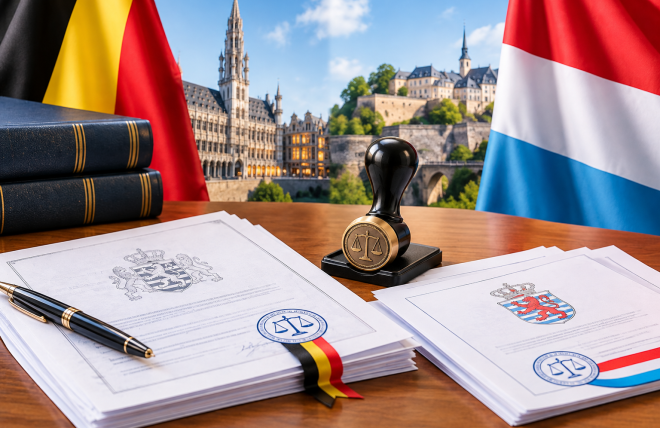
What is a sworn translation ?

1. Who provides sworn translations?
Sworn translations are carried out by a sworn translator, also known as a certified translator.
This professional is authorised in accordance with the rules of the relevant country or authority. They translate the document and generally affix:
- Their signature.
- Their professional stamp or seal, depending on the applicable rules.
- A certification statement.
- The necessary details regarding their authorisation.
The translation is thus presented as an official translation, within the limits of the certification and the requirements of the receiving authority.
2. What documents can be translated?
Civil status documents
Birth, marriage and death certificates; family record book.
Qualifications and academic documents
Degrees, academic transcripts, certificates of enrolment.
Legal and administrative documents
Court judgements, contracts, notarised deeds, procedural documents.
Identity and immigration documents
Passports, identity cards and other documents required for certain applications.
3. What is a sworn translation used for?
It may be required for:
- An application for citizenship or naturalisation.
- A marriage abroad.
- Enrolment at a university.
- Legal proceedings.
- Dealing with a foreign government body.
- An immigration or visa application.
Please note: a sworn translation is not automatically required for all documents. The receiving authority or organisation determines the conditions for acceptance.
4. Sworn translation, apostille and legalisation: what is the difference?
Term Role
Sworn translation Translates and certifies the content of a document in accordance with the translator’s authorisation.
Apostille Authenticates certain signatures or official capacities for international use, in accordance with the applicable rules.
Legalisation An authentication procedure designed to enable a document to be recognised abroad.
A sworn translation may be accompanied by an apostille or legalisation, but these are separate procedures.
5. Concrete example
You need to submit a French birth certificate to a Belgian government department.
- You provide your original birth certificate or the requested copy.
- A sworn translator authorised for the relevant language combination carries out the translation.
- They add the required certification details.
- You submit the translation to the Belgian authority, together with any additional formalities requested.
The Belgian authority may impose specific requirements: type of translation, the translator’s accreditation, signature, format or authentication procedures.
To sum up
A sworn translation is an official translation certified by an authorised translator, intended for submission to an authority or organisation that requires a recognised translation.